
Identifying Common British Trees by Their Leaves
Why Leaves Are the Gardener's Best Clue
Most of us meet a tree on a walk, not in a botany class, and we want an answer before the dog pulls us on. Bark is handsome but variable; catkins and fruit are seasonal. Leaves, though, are on show from May to October, and each one carries three pieces of information at once: shape, arrangement along the twig, and how it colours up in autumn. Get into the habit of noticing all three and the common British woodland trees become quick to separate.
Pick a leaf from a low branch rather than the ground where you can — fallen leaves lose their stalk and their arrangement tells you nothing. Take the twig, not just the leaf. A hand lens helps, too; the tufts of hair in the corners of an oak leaf are worth seeing close up.
First Question: Opposite or Alternate?
Before you agonise over lobes and teeth, look at how the leaves are attached. This single distinction halves your options immediately.
- Opposite: leaves sit in facing pairs at the same point on the twig, or in whorls of three. Ash, field maple, sycamore and horse chestnut are opposite.
- Alternate: leaves step up the twig one at a time, alternating sides. Oak, beech, birch, hazel and lime are alternate.
Run your thumb and finger up a twig. If you keep finding leaves at the same level on both sides, it is opposite. Ash and field maple are both opposite, which is why people muddle them; leaf shape sorts them out in seconds.
Oak: Rounded Lobes and Almost No Stalk
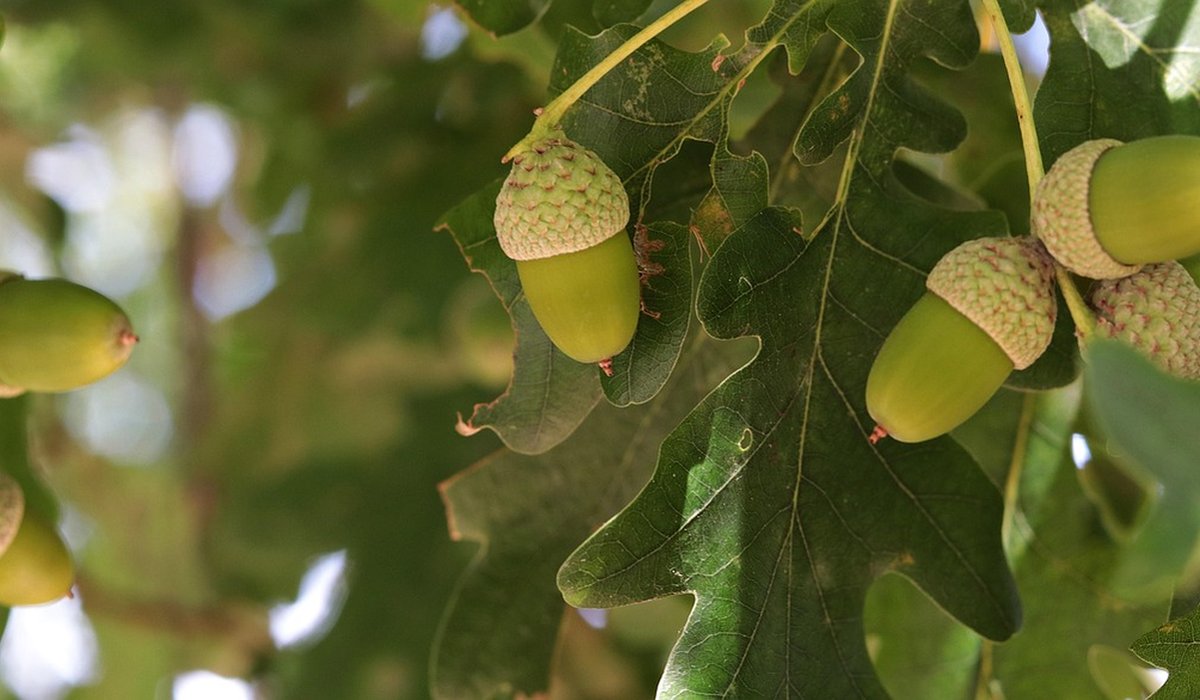
Our native English oak (Quercus robur) has leaves with deep, rounded lobes — never sharp points — and, crucially, an extremely short stalk. The blades crowd right up against the twig, with small earlobe-like flaps called auricles at the base. Sessile oak (Quercus petraea), more common in the wetter west and on upland edges, reverses the trick: longer stalks and no auricles. The names are a giveaway — 'sessile' refers to the stalkless acorns, so in sessile oak it is the leaves that have stalks and the acorns that do not.
Autumn colour is a soft russet brown rather than a shout. Young oaks and hedgerow oaks often hold their dead leaves through winter, which is a handy winter clue. For gardeners, oak leaves are slow to break down, so shred them or stack them for two years to make a crumbly, acidic leaf mould.
Ash: Pinnate Leaves in Opposing Pairs
Ash (Fraxinus excelsior) has pinnate leaves: a central stalk carrying nine to thirteen leaflets, usually set opposite each other, with one terminal leaflet at the tip. Each leaflet is lance-shaped with a toothed margin. The whole leaf can reach 30cm, so it feels big and feathery in the hand.
A second clue waits on the twig in winter — velvet-black buds set in opposite pairs. No other common British tree has buds quite like them. Autumn colour is disappointing: a dull yellow-green, with leaves often dropping early and greenish. Ash seedlings self-seed enthusiastically in borders, and with ash dieback now widespread, planting is worth considering carefully. Enjoy the mature trees you have.
Beech: Oval, Silky-Edged and Copper in Autumn
Beech (Fagus sylvatica) leaves are simple ovals, alternate on the twig, with a wavy, slightly hairy margin and clear parallel veins running from the midrib to each tooth. Hold one up to the light and the veins show like a comb. New leaves in spring are a translucent, almost edible green.
Autumn is where beech earns its place: leaves turn gold, then bronze, then a rich copper-brown, and on hedges and young trees many stay put all winter. That marcescence makes beech hedging practical in a garden — it holds structure and privacy when everything else is bare. The same leaves build excellent leaf mould, and the deep, dry litter beneath a beech wood suppresses most weeds. Copper beech is simply a purple-leaved form of the same species.
Field Maple: Small, Five-Lobed and Butter Yellow
Field maple (Acer campestre) is our only native maple, and its leaves are neat, small things — generally 4–7cm across, with five blunt lobes (three on shaded or juvenile growth) and a rounded, not spiky, outline. They sit in opposite pairs. Snap a leaf stalk and a milky sap appears; new growth and stalks are often tinged with red.
Autumn colour is the best of the four here: a clear butter-yellow, sometimes flushed with red and orange. It tolerates clipping, is happy on chalk and clay, and makes a superb native hedge or small garden tree. Grow it beside oak or beech for a long season of interest.
Quick Leaf-Key for Woodland Walks
- Rounded lobes, alternate, blade tight to the twig: English oak.
- Rounded lobes, alternate, long stalk, western and upland woods: sessile oak.
- Pinnate, opposite, velvet-black winter buds: ash.
- Oval with a silky wavy margin, alternate, coppery in autumn: beech.
- Five blunt lobes, opposite, winged seeds in pairs: field maple.
Learn these four and you have the backbone of lowland British woodland. Everything else — lime, hornbeam, birch, wild cherry — becomes an easy exception to spot rather than a mystery.


Plant guelder rose, rowan and holly to provide winter berries that feed thrushes, waxwings and other garden visitors.
Mulch roots, stake whips and guard bark against frost and rabbits so new plantings survive until spring growth begins.
Position a specimen tree to draw the eye, divide open space and give your plot a stronger sense of shape and scale.
Sow yellow rattle and native grasses under fruit trees to reduce mowing and boost biodiversity in a productive garden.