
Planting Under Trees Without Damaging Roots
Why the Ground Beneath a Tree Is Different
That dry, rooty, shadowed patch under a mature oak or beech can look like a problem. In truth it is one of the most rewarding places in a British garden to plant, provided you work with the tree rather than against it. The key is understanding what is going on below the surface. Most of a tree's feeding roots sit in the top 30cm of soil, spreading far wider than the canopy. They are not just competing for water and nutrients — they are also the reason you should put your fork away.
Add in summer shade, autumn leaf litter and the fact that the soil is often dry by June, and you have a growing environment quite unlike a sunny border. Choose the right plants and dig as little as possible, and you can create a genuine woodland layer that looks established rather than plonked.
Rule One: No Deep Digging, Ever
Deep cultivation within the root zone is the single most damaging thing you can do under a tree. Slicing through roots opens the tree to decay, severs the fine roots that take up water, and damages the mycorrhizal fungi that help it feed. As a working guide, treat the area beneath the canopy — plus a metre or so beyond — as a no-dig zone.
- Never raise the soil level. Even 10cm of imported topsoil piled over roots can smother them. Bare-rooted trees are especially vulnerable.
- Plant in pockets, not trenches. Use a hand fork to loosen a small area just big enough for the rootball.
- Keep off the soil. Compaction is silent damage. Lay a plank or stepping stone if you need to reach in.
- Keep mulch clear of the trunk. A 5–7cm layer of leafmould or composted bark is ideal, but leave a 10cm gap around the bark so it does not stay damp.
If a root thicker than your thumb is in the way, plant somewhere else. It is not worth the risk.
Plants That Cope With Dry Shade
British native woodland plants have evolved for exactly these conditions, so they are the natural starting point. Most establish best as small plants or bulbs rather than large specimens, which demand more water and more digging.
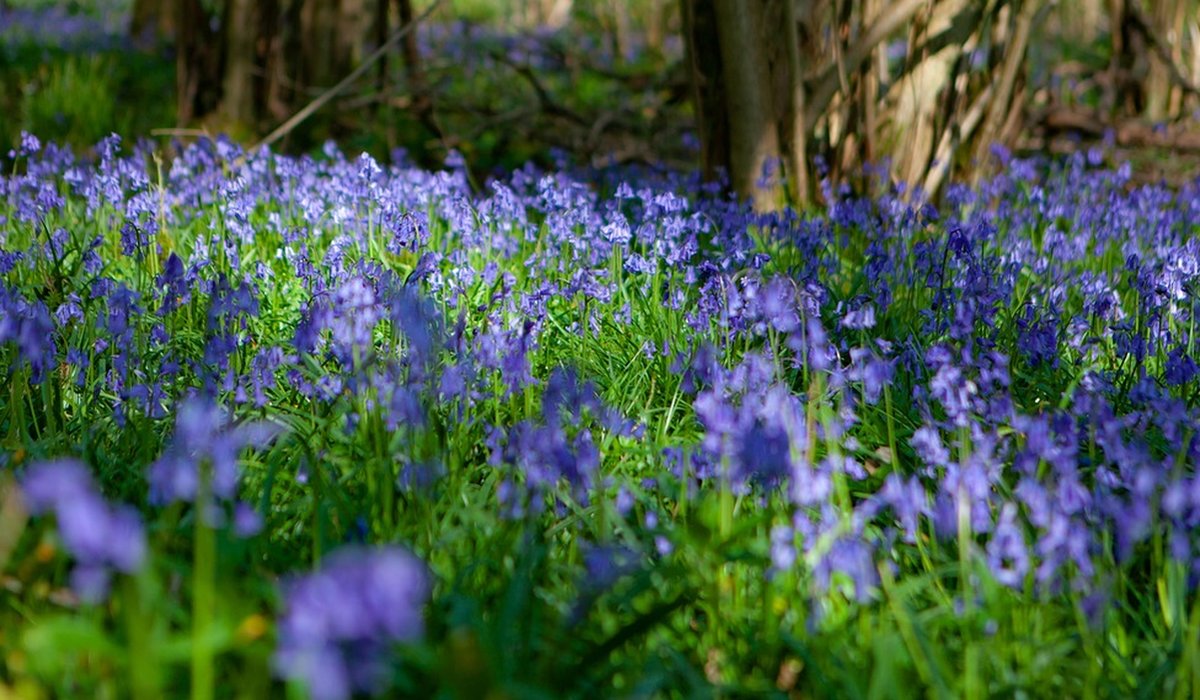
- Spring bulbs: native bluebell, snowdrop, wild daffodil and wood anemone will flower before the canopy closes over. Plant them as dormant bulbs in autumn, scattered and left where they land.
- Ramsons (wild garlic): superb in damper shade, though it spreads freely — give it room or a hidden corner.
- Ferns: hart's tongue, soft shield and male fern bring structure without asking for much sun.
- Woodland perennials: primrose, bugle, wild strawberry, wood sedge and wood melick grass all tolerate root competition.
- Foxgloves will seed themselves into gaps and give height in early summer.
Avoid anything that needs rich, moist soil or full sun. Lavender, delphiniums and most bedding will sulk and die, and no amount of watering will change the fundamentals.
Knowing Your Tree's Root Habits
Not all trees behave the same way, and it pays to know what you are gardening under. Beech and birch cast dense shade and run shallow, thirsty roots that leave little for anyone else — plant only the toughest candidates beneath them, and expect slow growth. Oak and ash are somewhat more generous, with roots that go deeper in good soil, so a wider range of plants will manage. Hazel, hawthorn and field maple are all forgiving, and their lighter canopies let more rain and light through.
If you are planting new trees with underplanting in mind, a native mix of hazel, hawthorn and field maple around a standard oak or lime gives you the best of both worlds: a wildlife-friendly canopy and soil that still has something left to give.
How to Plant Carefully
The technique is simple and quick, which is exactly the point. Work in autumn or early spring when the soil is damp and the tree is least active above ground.
- Choose 9cm pot or bare-root plants. Small plants settle faster and need less watering.
- Scrape back leaf litter, then loosen a planting hole no wider than twice the rootball.
- Position the plant, firm gently with your fingers, and water in well.
- Mulch around it, keeping the mulch off the stems.
- Water through the first two summers during dry spells — that is usually enough to get them away.
Plant in small groups rather than straight lines. Woodland is never tidy, and drifts of the same species read far better than scattered singletons.
Looking After the Layer Long Term
Once established, a woodland understorey largely looks after itself. Leave fallen leaves where they land — they are free mulch and free food. Resist the urge to feed with high-nitrogen fertiliser, which encourages soft growth and weeds rather than flowers. If you need to thin or move something, do it with a hand fork in autumn and keep disturbance to a minimum.
Above all, be patient. Woodland plantings take two or three seasons to knit together, then improve year on year. A little restraint now means a canopy that stays healthy for decades and a green layer beneath it that feels as though it has always been there.


Discover compact British species that suit limited space, provide year-round interest and support local wildlife without overwhelming neighbours.
Learn how to layer bulbs, ferns and shade-loving shrubs to turn a gloomy corner into a tranquil woodland clearing.
Follow simple winter pruning cuts to remove dead wood, improve airflow and encourage a reliable crop of garden apples.
Mix hawthorn, blackthorn and hazel to create a dense nesting corridor that offers food and shelter throughout the seasons.